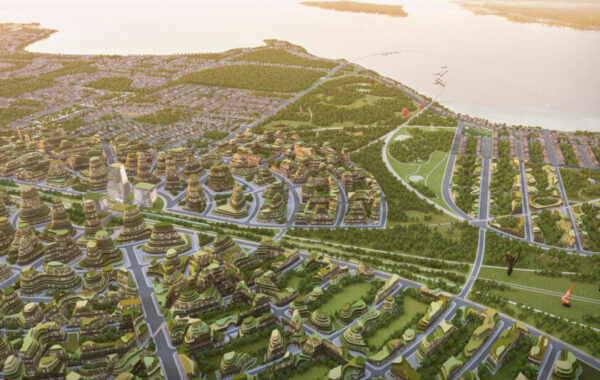
Why are Smart City Trends Gaining Importance?
The growth of cities, increasing population density, and the acceleration of digitalization have necessitated a redefinition of public spaces. At the heart of this transformation, smart urban furniture is no longer merely a complementary element, but is becoming an active component of urban infrastructure.
Smart city trends directly influence how cities are planned, how public spaces are used, and how citizens interact with the city. Therefore, accurately analyzing these trends has become a critical requirement for municipalities, architects, and urban planners.
Energy Independent Systems: The Rise of Solar Transformation
Among smart city trends, the fastest-growing topic is energy-independent systems. Solar solutions, in particular, are reducing cities' dependence on energy infrastructure.
Off-grid systems:
- It eliminates the need for electrical infrastructure
- It speeds up the installation processes
- It reduces long-term energy costs
Thanks to solar-powered urban furniture, parks, squares, and bus stops are now transforming into areas that generate their own energy. This provides a significant cost advantage, especially in large-scale projects.
IoT and Data Integration: Digitalizing Cities
Another key component of smart city trends is IoT (Internet of Things) infrastructure. Smart city furniture is no longer just physical, but also data-generating systems.
The main data collected are:
- User density
- Energy production and consumption data
- Environmental measurements (temperature, air quality, etc.)
- Usage periods
Thanks to this data, city administrations can:
- You can perform density analysis
- We can optimize resources
- It can properly position new investments
Data-driven city management will be one of the most important competitive advantages for cities in the future.
Multifunctional Design: One Product, Multiple Purposes
While traditional urban furniture serves a single need, the new generation of smart urban furniture stands out with its multifunctional designs.
For example, a smart bank:
- It offers a seating area
- Provides charging capability for mobile devices
- It functions as a Wi-Fi hotspot
- Provides lighting
- It serves a data collection function
This versatile use both increases space efficiency and improves the user experience. Such solutions offer significant advantages, especially in high-traffic public spaces.
Modular and Scalable Systems
Another prominent element among smart city trends is the modular design of systems. Since cities are dynamic structures, the solutions used must also be flexible.
Advantages of modular systems:
- Expandable as needed
- Easily adaptable to different projects
- It optimizes investment costs in the long run
This approach enables sustainable growth, especially in large-scale urban projects.
Sustainable Materials and Long-Lasting Design
Smart city trends are not limited to technology alone. The materials used are also an important part of this transformation.
Key criteria for the future:
- Use of recyclable materials
- UV and weather resistance
- Resistance to vandalism
- Low maintenance requirements
Long-lasting products both reduce environmental impact and lower the total cost of ownership.
User-Centered Design Approach
User experience is at the heart of smart city trends. Therefore, designs are no longer just about aesthetics, but are shaped according to user behavior.
Key elements of user-centered design:
- ergonomic design
- Easy access
- Accessible for people with disabilities
- Fast and practical interaction
This approach encourages more active use of public spaces.
Increased Safety and Durability Standards
Ensuring the security of smart systems used in public spaces is a critical requirement. Therefore, in new generation smart city furniture:
- Electrical safety precautions
- Vandalism resistance
- Remote monitoring systems
It stands out.
These features ensure the sustainability of systems, especially in high-traffic areas.
Propysalford's Approach to Smart City Trends
Propysalford has an approach that not only follows smart city trends but also implements them in the field.
Solutions developed:
- It provides energy independence through solar energy infrastructure
- It generates data through IoT integration
- Modular structures add flexibility to projects
The product family (PropyStation, SolarBreeze, EnviroScape, SunDine, SunSavor, etc.), when used together, forms an integrated smart system within the city.
This approach addresses not only the current needs of cities, but also their future needs.
Frequently Asked Questions
Why are smart city trends important?
Smart city trends enable cities to become more efficient, sustainable, and user-centric. When implemented correctly, they offer both cost advantages and improved quality of life.
Why are solar systems becoming prominent in smart urban furniture?
Solar systems provide energy independence, reduce installation costs, and offer significant advantages in terms of sustainability.
How is IoT used in smart urban furniture?
IoT systems collect and analyze usage data, enabling more informed decisions in city management.
Are smart urban furniture economical in the long run?
Yes. It offers an advantage in terms of total cost thanks to its low energy consumption, low maintenance requirements, and long service life.
Why is modular design important?
Modular systems adapt quickly to the changing needs of cities and ensure more efficient use of investment.
Contact Propysalford to develop sustainable and scalable solutions aligned with smart city trends . Together , plan the right systems to take your city projects into the future.